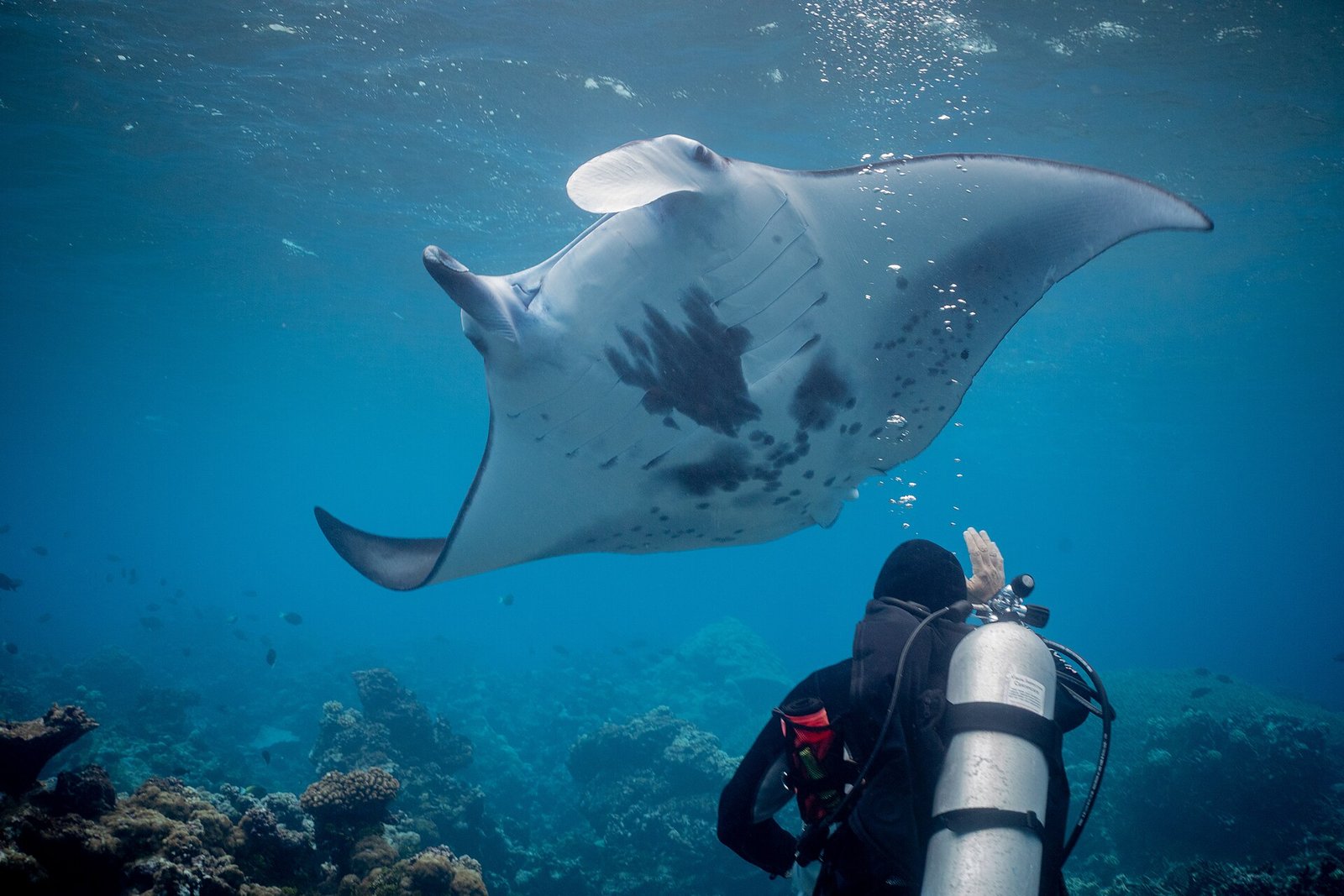
After dark off the Kona coast, something remarkable happens. Boats switch on bright lights, the lights draw in clouds of plankton, and reef manta rays glide in from the darkness to feed, sometimes just inches below you. The manta ray night dive and snorkel is one of the most popular experiences on Hawaiʻi Island, and for good reason. Here’s how it works, where it happens and how to choose a tour.
How the manta ray night dive works
Kona’s manta tours take advantage of a simple bit of nature. Plankton is drawn to light, and mantas come to eat the plankton. Tour boats set up lights at known feeding sites, and the mantas arrive to feed, looping and somersaulting through the beams with their mouths wide open.
- Snorkelers float at the surface holding onto a lit board or ring. You stay still and let the mantas come to you. No experience is needed beyond being comfortable in the ocean at night.
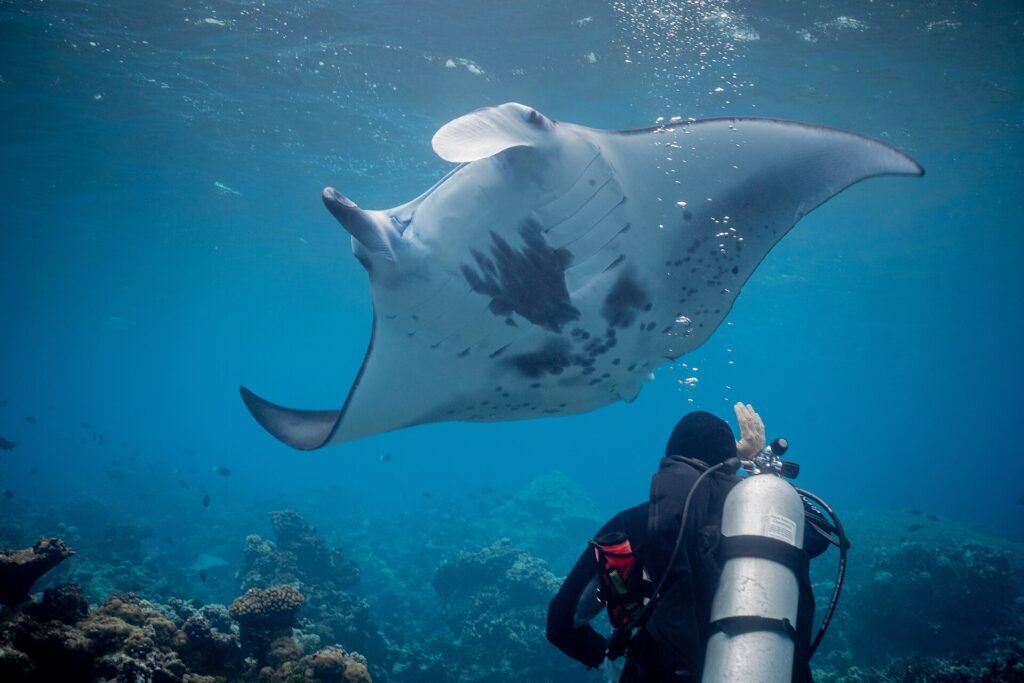
- Scuba divers settle on the sandy bottom, often around a cluster of dive lights the guides call the “campfire,” and watch the mantas feed overhead. You’ll need a scuba certification for the dive.
Most tours leave around sunset, spend roughly an hour in the water at the site and return after dark. Many dive trips add a twilight reef dive before the main event.
Where to see manta rays in Kona
There are a few established manta viewing sites along the Kona coast:
- Manta Village (Keauhou Bay): south of Kailua-Kona, a short boat ride from Keauhou Bay.
- Manta Heaven (Garden Eel Cove): north of Kailua-Kona near Kona International Airport, with a sandy bottom and a reef that makes for a good twilight dive.
- The Kohala Coast site: near Kawaihae Harbor by the Kohala resorts, usually quieter with fewer boats.
Your tour company picks the site based on conditions and recent sightings, so you rarely need to choose one yourself.
What are your chances of seeing mantas?
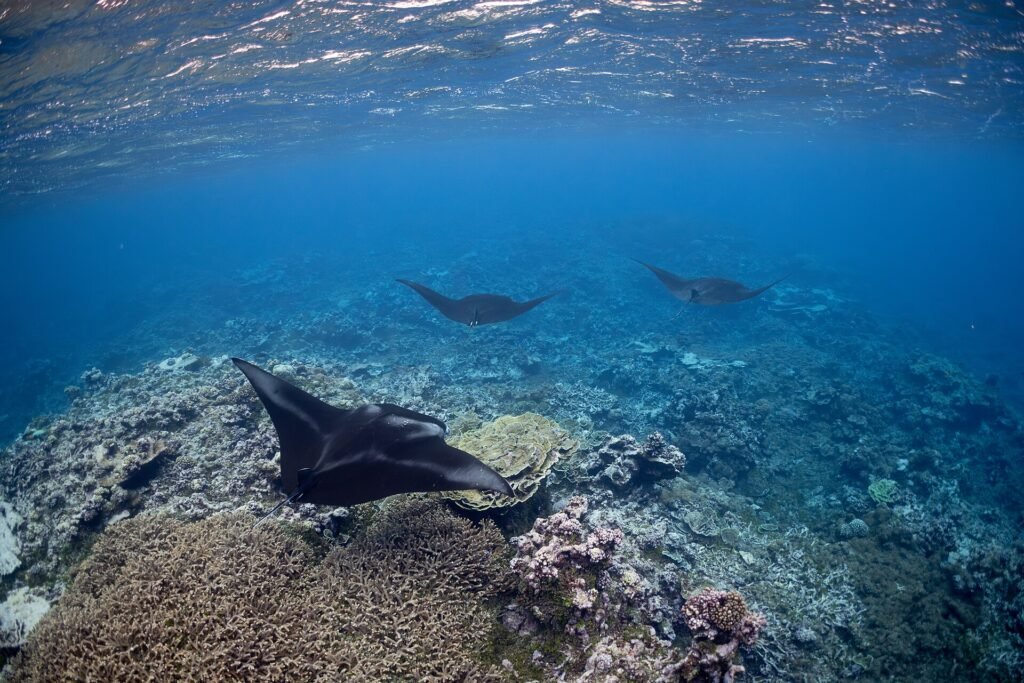
Kona’s reef mantas live here year-round, so there’s no special season. Operators commonly report seeing mantas on most nights, but they’re wild animals and there are no guarantees. Many companies offer a discount or a free return trip if no mantas show up. Ask about the policy before you book, and try to book early in your stay so you have time for a second try.
How to choose a manta tour
- Snorkel or dive: snorkeling is the easier choice for most people. Divers get a different angle, with mantas passing overhead.
- Boat size: smaller boats mean fewer people around the light board. Larger boats can be more comfortable on the ride out.
- Wetsuits and gear: the water feels cooler at night. Look for tours that include a wetsuit, mask, snorkel and fins.
- Departure point: tours leave from Honokōhau Harbor, Keauhou Bay or Kailua Pier. Pick one close to where you’re staying.
- Combo trips: some tours pair a sunset cruise or afternoon snorkel with the manta stop.
Book a manta ray tour
We may earn a commission when you book through links on this page, at no extra cost to you. How we make money.
Compare Kona manta ray night snorkel and dive tours to see departure times, boat sizes, prices and reviews.
Be kind to the mantas
Manta rays are protected in Hawaiʻi, and how you behave in the water matters. Follow your crew’s instructions and these simple rules:
- Don’t touch the mantas. Touching can damage the protective coating on their skin.
- Don’t chase them or dive down toward them. Stay at the surface or on the bottom and let them come to you.
- Keep your body flat and still at the surface so your fins don’t kick a feeding manta.
- Wear mineral, reef-safe sunscreen on afternoon departures, or skip it on night-only trips.
Research groups have identified and named hundreds of individual Kona mantas by the spot patterns on their bellies, so the mantas you meet may well have names.
Tips for your manta night
- Take seasickness medicine before you board if you’re prone to it. The boat rocks while you’re waiting at the site.
- Bring a towel, a warm layer and a dry change of clothes for the ride back.
- Eat a light meal beforehand. Tours run over dinnertime.
- Leave the big camera at home unless you’re an experienced night shooter. A small action camera works best.
Getting there and where to stay
Most manta tours leave from the Kailua-Kona area, so staying in Kona or Keauhou keeps the night drive short. See our guide to where to stay on the Big Island. Compare car rentals at Kona Airport (KOA).