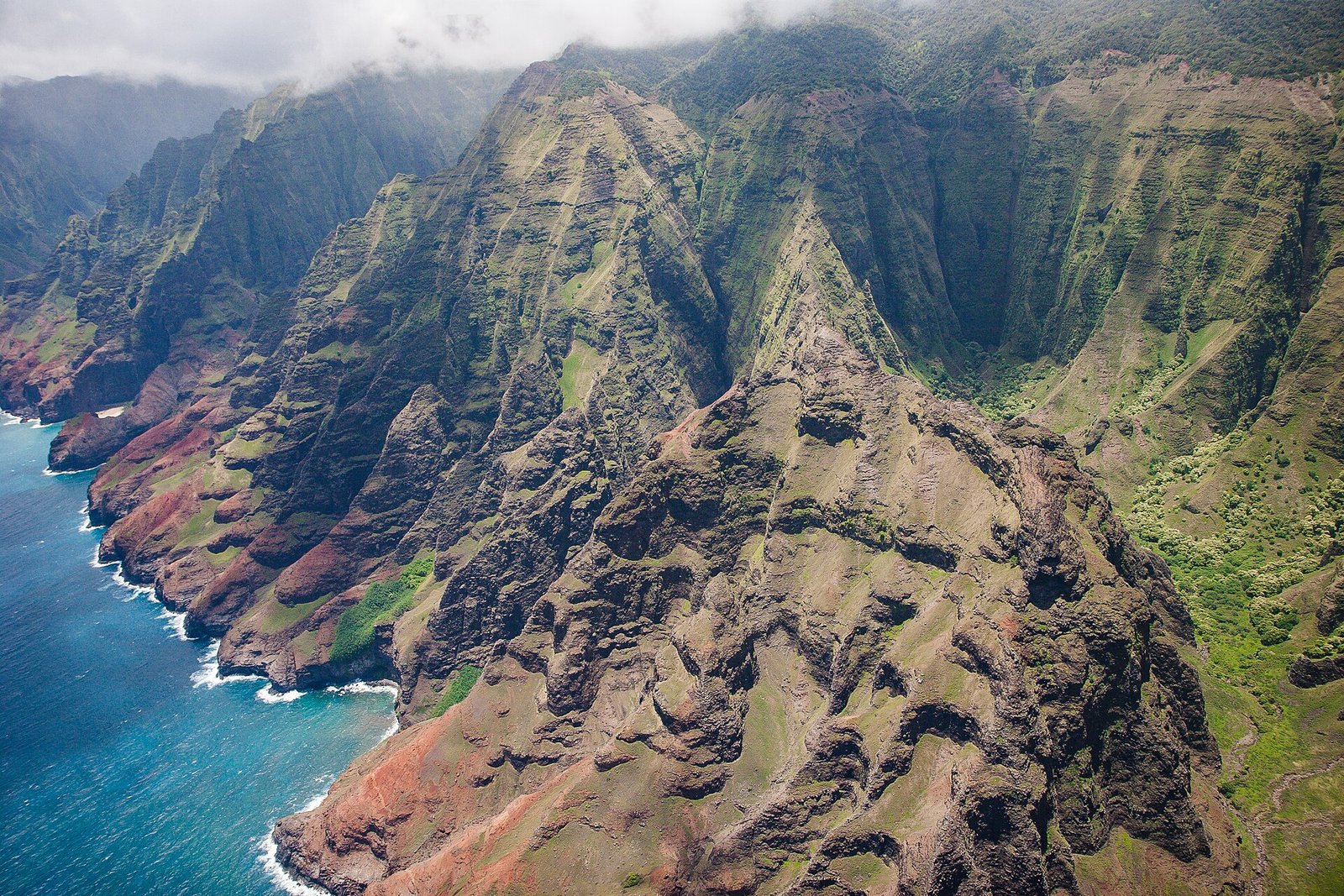
The Nā Pali Coast on Kauaʻi’s north-west side is a run of knife-edge green ridges and hanging valleys dropping straight into the sea. No road runs along it, so there are three ways to see it: from the water, from the air or on foot. Here’s how to choose between a boat and a helicopter, and when hiking makes more sense.
The short answer
- Choose a helicopter if you want to see the whole island in an hour: Nā Pali, Waimea Canyon, the interior waterfalls and Mount Waiʻaleʻale’s crater, places you can’t reach any other way.
- Choose a boat if you want time on the water, snorkeling, sea caves and the chance of dolphins, sea turtles and, in winter, whales.
- Do both if you can. They’re genuinely different experiences, and many visitors say the helicopter was the highlight of their whole Hawaiʻi trip.
Seeing Nā Pali by helicopter
Helicopter tours leave from Līhuʻe and usually last 50 to 60 minutes. A typical loop crosses Waimea Canyon, follows the Nā Pali cliffs, passes Hanalei and the north shore, and heads into the cloud-ringed crater of Mount Waiʻaleʻale, one of the rainiest places on earth, where waterfalls pour down the walls.
- Doors-off flights are best for photos (no window reflections) but louder and windier.
- Seats matter. Ask how seats are assigned. Some companies seat by weight, and a window seat changes the experience.
- Fly early in your trip so you have time to rebook if clouds cancel your flight.
- Morning flights usually have clearer skies over the mountains.
The Eco Adventure helicopter tour and the private doors-off tour are two of the most booked. For a cheaper flight with big windows, consider a small-plane sightseeing flight.
Seeing Nā Pali by boat
Most boat tours leave from Port Allen on Kauaʻi’s south-west side, run up the coast and come back, with a snorkel stop on calm days. You’ll see the cliffs from sea level, which is what makes them so dramatic, plus sea caves, waterfalls in wet weather and plenty of marine life.
- Catamarans are smoother and roomier, often with meals, drinks and a sunset option. Good for families and anyone prone to seasickness.
- Rafts are rougher and wetter but get closer, and in calm summer seas they can nose into sea caves.
- Summer is calmer. Roughly May to September, seas on the north and west shores are usually much gentler. Winter swells can make trips rough or cancel them.
- Sunset sails skip the snorkeling and go for golden light on the cliffs.
See the Nā Pali sunset dinner cruise or compare all Nā Pali boat tours.
Seeing Nā Pali on foot
The Kalalau Trail starts at Kēʻē Beach in Hāʻena State Park. The first two miles to Hanakāpīʻai Beach are a hard but popular day hike. Going farther needs a separate camping permit. Day visitors need a Hāʻena reservation, and they sell out. See the Hāʻena State Park guide. From the top, the Kalalau and Puʻu o Kila lookouts at the end of the Waimea Canyon road look straight down into the valleys.
Seasickness and safety
- Take seasickness medicine before you board, not once you feel ill.
- Sit near the back of a raft if you want a smoother ride.
- Follow the crew’s instructions at snorkel stops. Currents along this coast can be strong.
- Tours are weather-dependent. Operators will cancel or reroute if seas or skies are unsafe.
We may earn a commission when you book through links on this page, at no extra cost to you. How we make money.