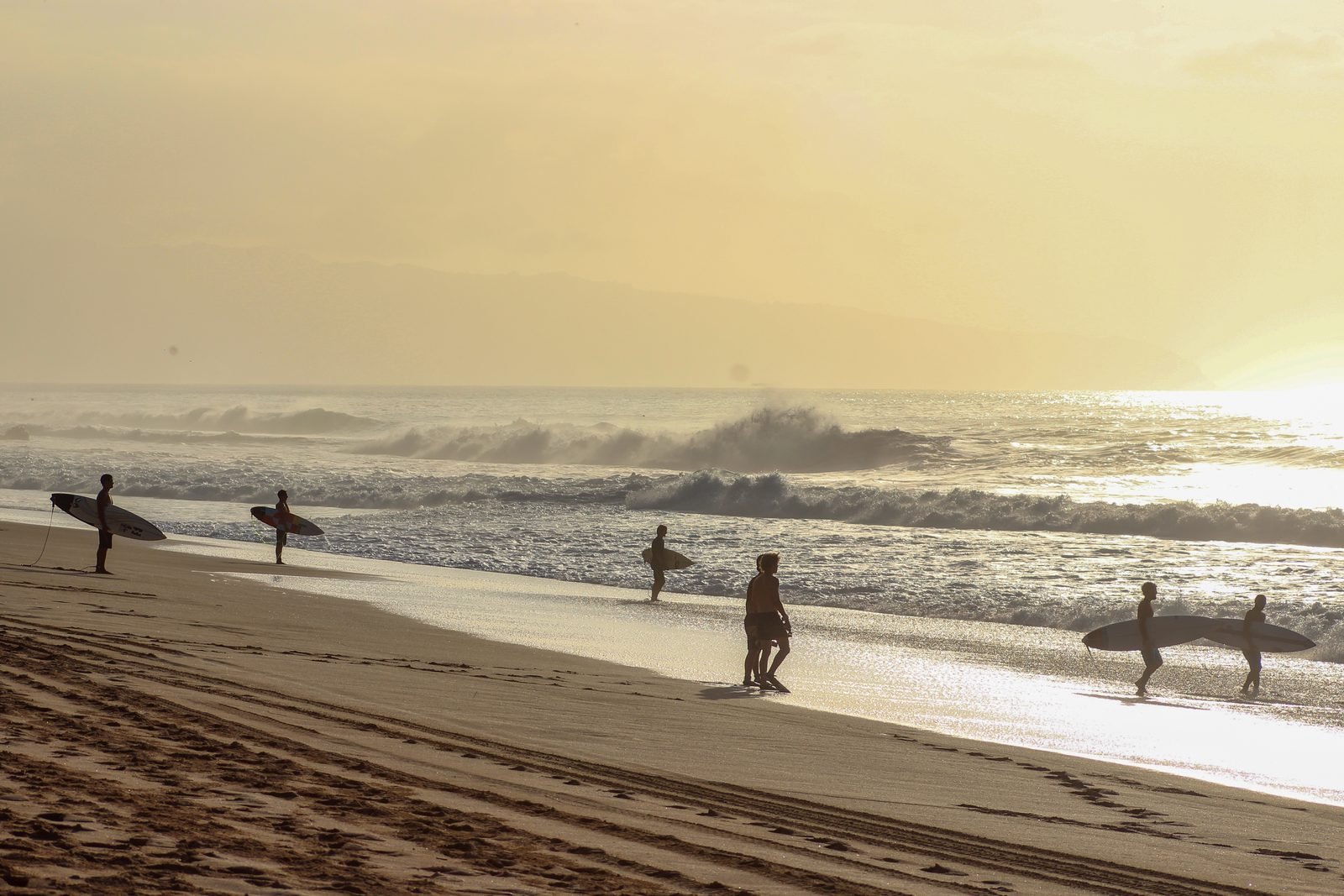
Oʻahu is one of the best places in the world to learn to surf, but where you take a lesson matters as much as who teaches you. Choose the right beach for your level and the season, and your first wave is a lot more likely to happen on day one.
First-timers: start in Waikīkī
Waikīkī has long, gentle waves that break over a shallow reef far from shore, plenty of surf schools, and lifeguards nearby. It’s where most people learn, and it works year-round. Most beginner lessons last about two hours and include a short lesson on the sand, a soft-top board and time in the water with an instructor.
Group or private lesson?
- Group lessons cost less and are fun with friends or family. You’ll share the instructor’s attention.
- Private lessons cost more, but you get one-on-one coaching and usually progress faster. They’re a good pick for nervous beginners or kids.
- Semi-private lessons (two or three people) are a good middle ground for couples or families.
Got the basics? Try the North Shore in summer
From roughly May through September, the North Shore is often calm, and some schools run lessons around Haleʻiwa. It’s a great way to see the North Shore when it’s calm and uncrowded.
Winter on the North Shore is not for lessons
In winter, the North Shore gets some of the most powerful waves on Earth. Unless you’re an experienced surfer, it’s a place to watch, not to paddle out. See our North Shore big-wave season guide for the best spots to watch from the beach.
Intermediate surfers
If you can already paddle out and catch waves on your own, a coaching session or a surf guide is a great way to find spots that match your level without getting in anyone’s way. Respect the lineup. Locals and regulars surf these breaks every day.
What to bring
- Reef-safe sunscreen. Hawaiʻi bans the sale of sunscreens containing oxybenzone and octinoxate.
- A rash guard or surf shirt to protect against sunburn and board rash
- Water and a snack
- A waterproof bag or phone pouch if you want photos
Quick safety tips
- Listen to your instructor and the lifeguards.
- Don’t surf alone, and stay inside your lesson area.
- If you’re unsure about conditions, stay out of the water.
Book a lesson
We may earn a commission when you book through links on this page, at no extra cost to you. How we make money.
Group and private lessons on Oʻahu fill up in peak season, so book a day or two ahead and pick a morning slot when the wind is usually lighter. Compare Oʻahu surf lessons on Expedia.